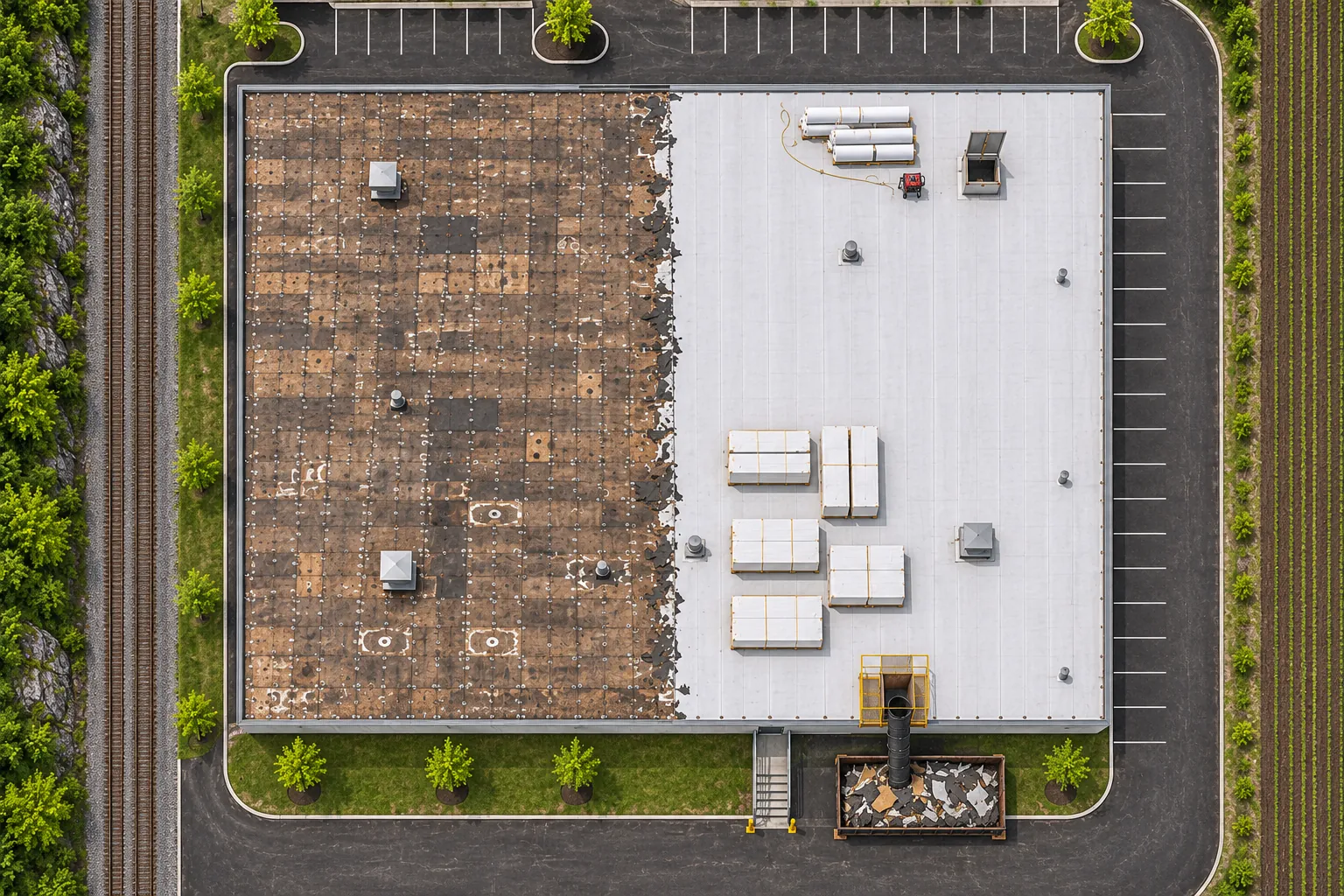
Commercial Roofing Services in Easton
Four Roof Systems and Full Tear-Off Replacement
Our commercial roofing services in Easton cover TPO, EPDM, industrial, and metal roofs, from a single section to a full tear-off down to the deck.
- SystemsFour Roof Types Installed
- ReplacementTear-Off To The Deck
- StartCores And Photos First
Commercial Roofing Services in Easton, PA by System
Commercial roofing services in Easton start with the right system for the deck, the slope, and the work going on below. Each tab names the buildings it suits.
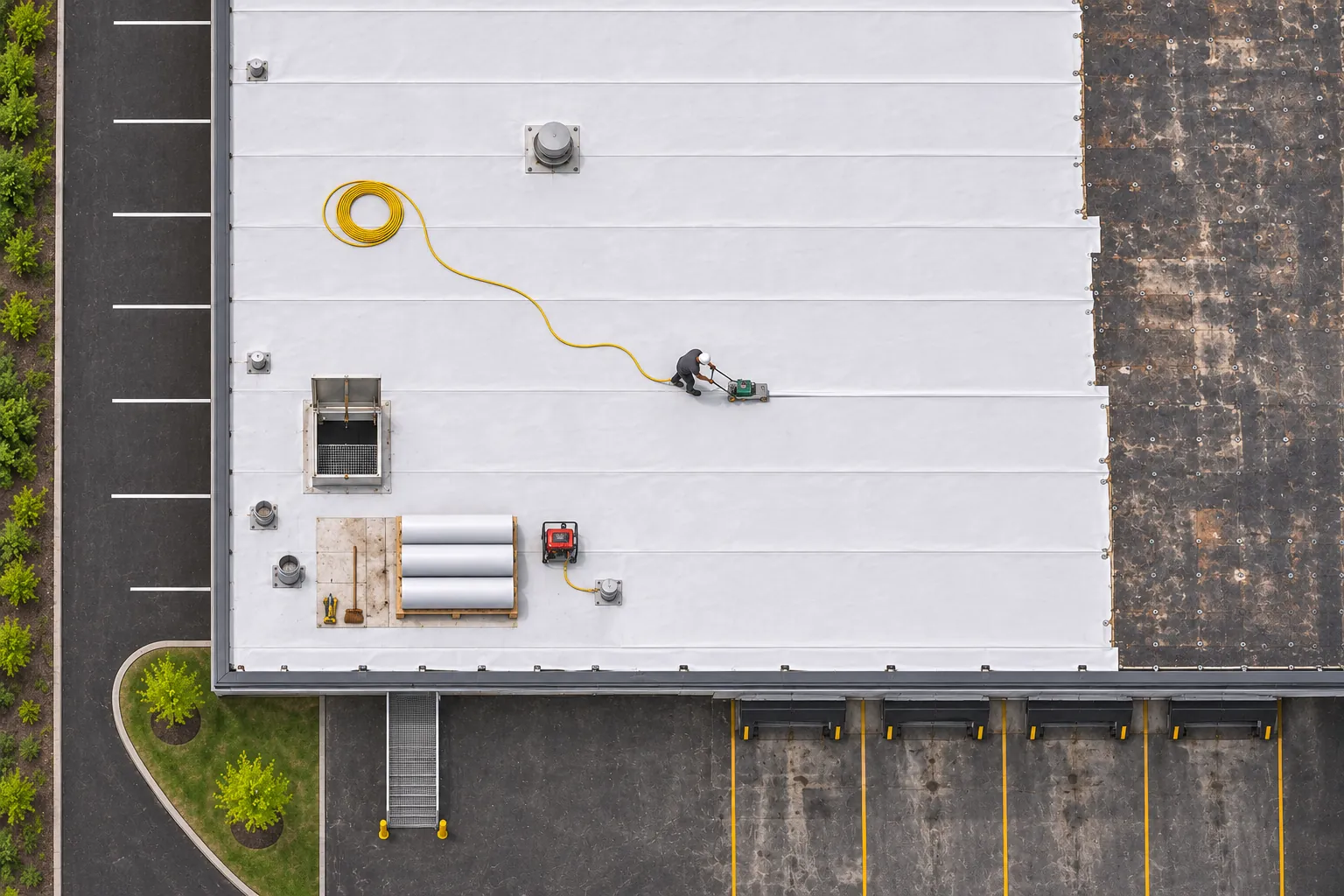
TPO Roofing Installation
Heat-welded TPO goes over tapered insulation on large flat fields. Each seam is probed after welding, and curbs get pre-formed corners so the flashing matches the field sheet.
- Big-box and dock warehouses
- Office flex buildings with open fields
- Kitchen exhaust zones without a grease plan
- Recovers over saturated insulation
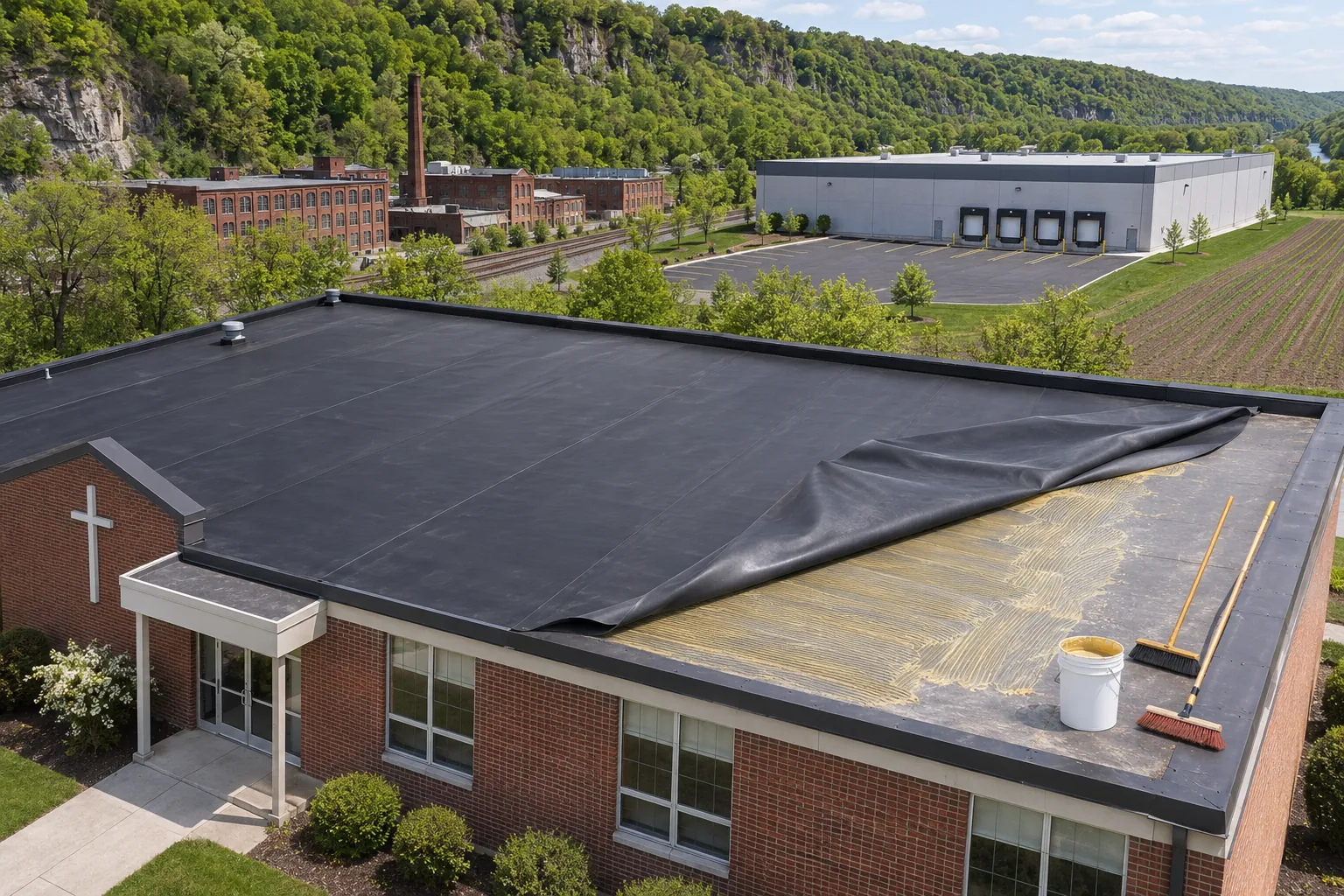
EPDM Rubber Roof Replacement
Fully adhered EPDM bonds to a cover board for a quiet, flexible roof. Taped laps and cured flashing tie it into parapets, scuppers, and the many pipes on older buildings.
- Brick buildings with tall parapets
- Roofs full of small pipe penetrations
- Roofs that need a white reflective surface
- Heavy maintenance traffic with no pads
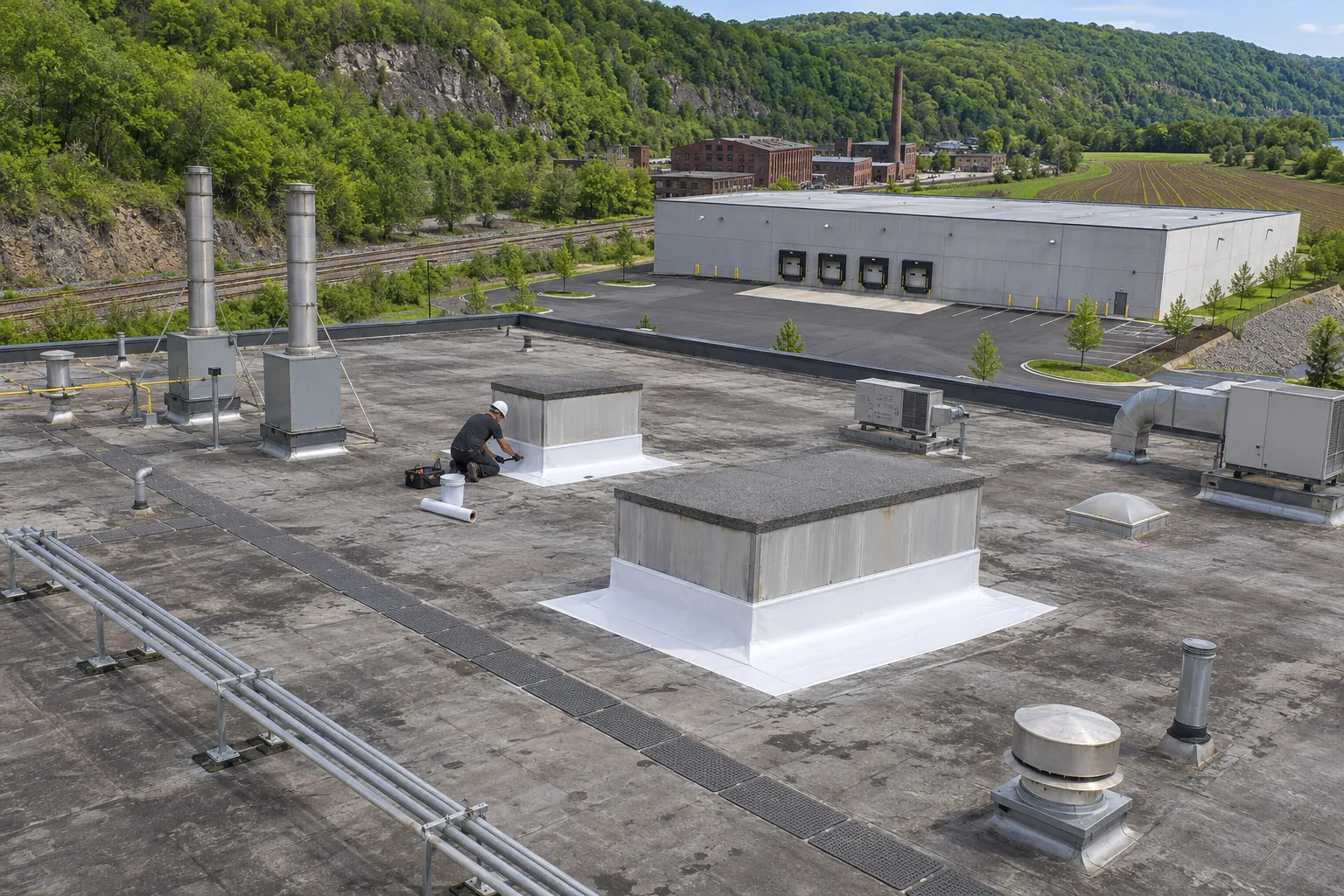
Industrial Roof Systems
Membrane choice, flashing heights, and walkway layout are set for the stacks, ducts, and process air on a plant roof. Removal is sequenced over the lines that keep running.
- Plants with exhaust and humid process air
- Roofs crowded with curbs and supports
- Plants planning to move equipment later
- Decks with open structural questions
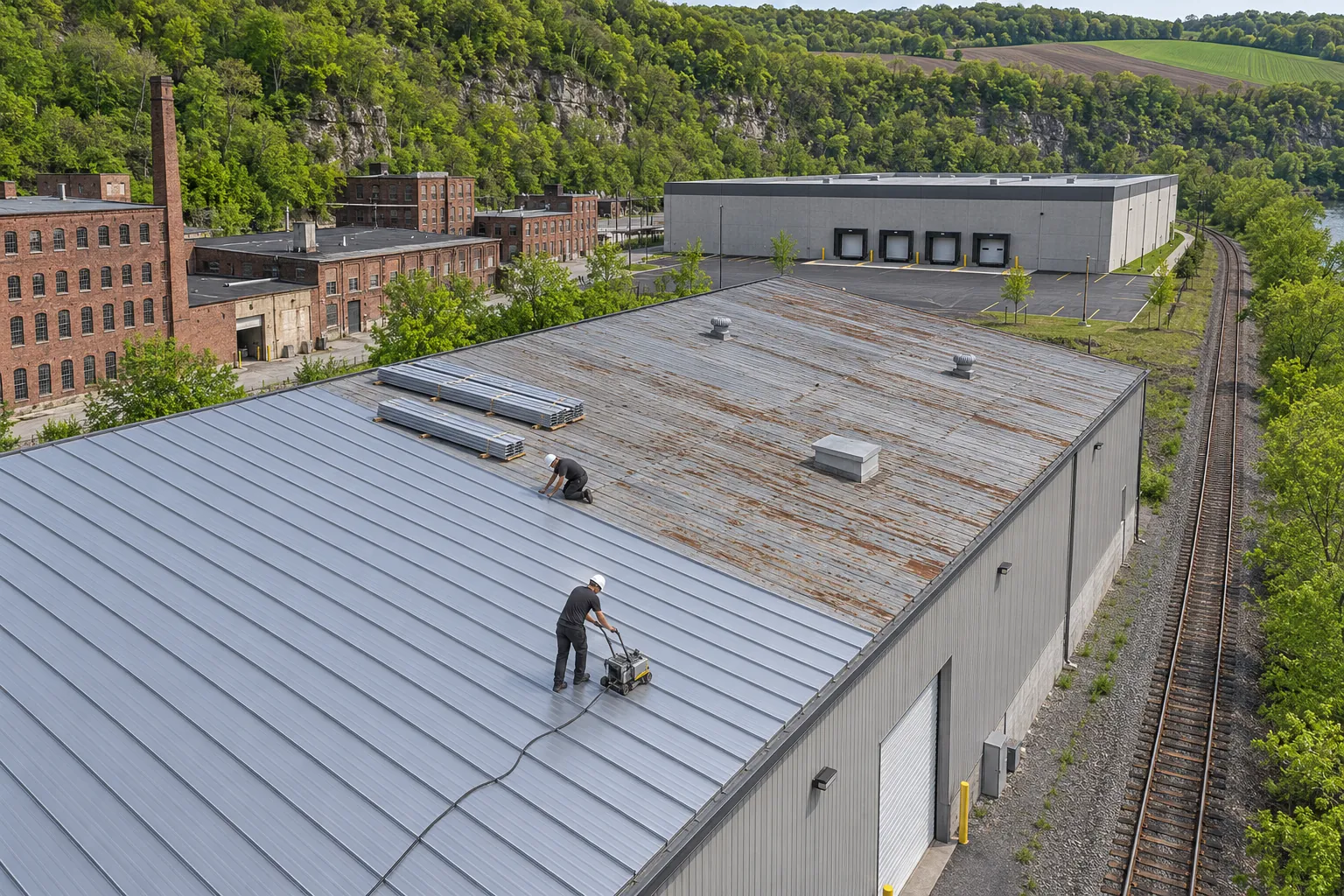
Standing-Seam Metal Roofs
Clipped standing-seam panels replace rusted screw-down roofs or sit on framing that adds pitch over a flat roof. Closures, trims, and penetrations are detailed for movement.
- Steel buildings and shops
- Flat roofs given new slope
- Buildings with unknown purlin capacity
- Quick patch jobs before a sale
Which System Fits Which Roof
A quick side-by-side of the four systems on the points owners ask about most.
| Point | TPO | EPDM | Industrial Assembly | Standing-Seam Metal |
|---|---|---|---|---|
| Seams | Hot-air welded | Taped laps | Matched to exposure | Mechanically seamed ribs |
| Surface color | White | Black | White or black | Factory finish |
| Best slope | Flat to low | Flat to low | Flat to low | Low to steep |
| Upkeep focus | Seams and curbs | Laps and flashing | Walkways and stacks | Fasteners and trims |
| Typical building | Warehouse | Church hall, office | Packaging plant | Steel shop |
Roof Older Than the Last Two Tenants?
A worn roof is easier to replace on your schedule than after a storm forces it. Call and we will look at the layers, the deck, and the drains.
(484) 978-7949Call UsFrom First Core Cut to Closeout
Replacement and new installs follow the same five decisions, in the same order, on every building.
Inspect Your Roof
Core cuts, a walk of every curb and drain, and photos of the deck where it can be seen from inside. Findings go into a short written report.
Recover or Tear Off?
One dry existing layer can sometimes stay under a recover. Wet board, two layers, or soft deck means removal down to the steel or wood.
System and Insulation
The membrane or panel is chosen with the insulation thickness, cover board, and taper needed to move water to the drains.
Sections and Staging
Crane picks, dumpster spots, and daily closures are laid out around docks, entrances, and any rooftop equipment that must stay running.
Closeout Walk
We walk the finished roof with you, test drains with water, and hand over photos, layer notes, and product data.
Commercial Roof Replacement Easton Owners Plan For
Commercial roof replacement in Easton follows the same checks whichever system goes on. These are the points that decide when to replace a commercial roof.
When To Replace a Commercial Roof
Wet insulation over a large share of the field, repeated leaks after repairs, and seams opening faster than they can be patched all point to replacement.
Two Layers Already On
We take a roof that already carries two coverings down to the deck before a new one goes on, and the reroof is reviewed under the statewide code.
Deck Repairs Found at Tear-Off
Rusted steel flutes and soft wood planks are replaced as they are exposed, at the unit price set in the proposal.
Equipment Raised for New Thickness
Curbs too short for the new insulation are raised so base flashing reaches its required height.
New Edge Metal and Coping
Perimeter metal is replaced with the field, since the old edge rarely matches the new roof height.
Questions About Commercial Roof Replacement
What owners ask when they compare repair, recover, and full replacement.
Can a New Roof Go Over the Old One?
Sometimes, when there is one existing covering and the insulation under it tests dry. Core cuts across the field decide it. Wet board or a second layer means a tear-off, because a new membrane over trapped moisture keeps the problem in the building.
How Long Does a Commercial Tear-Off Take?
It depends on area, layers, and access, and the schedule is set per section. Each area opened in the morning is closed with new membrane or a temporary seal by the end of that day, so the building stays dry while work moves across the roof.
Who Moves the Rooftop Units?
Your mechanical contractor disconnects and resets units when curbs have to be raised. We coordinate the dates so the units come off just before that section is torn off and go back once the new curb flashing is in.
Do Tenants Have to Leave During a Reroof?
Rarely. Interior protection goes up under the active section, noisy work is scheduled around business hours where possible, and entrances are kept clear of hoisting. Tenants get notice of the dates for their part of the building.
What Paperwork Comes at the End?
A closeout set with photos of each stage, the products and thicknesses installed, the core cut locations, and any deck repairs made. Keep it with the building records for future inspections, insurance questions, refinancing, and a sale, and share it with the next roofer who works on the building.
Which System Costs Less to Keep Up?
Upkeep follows the roof more than the label. A TPO or EPDM roof with walkway pads, clear drains, and tall curb flashing needs fewer service calls than either one crowded with equipment and shortcuts. We list the details to check each spring and fall for the system you choose.
Book Commercial Roofing Services in Easton, PA
Tell us the building type, roof size if you know it, and what you see on the roof. We will walk it and write a scope you can compare line by line.