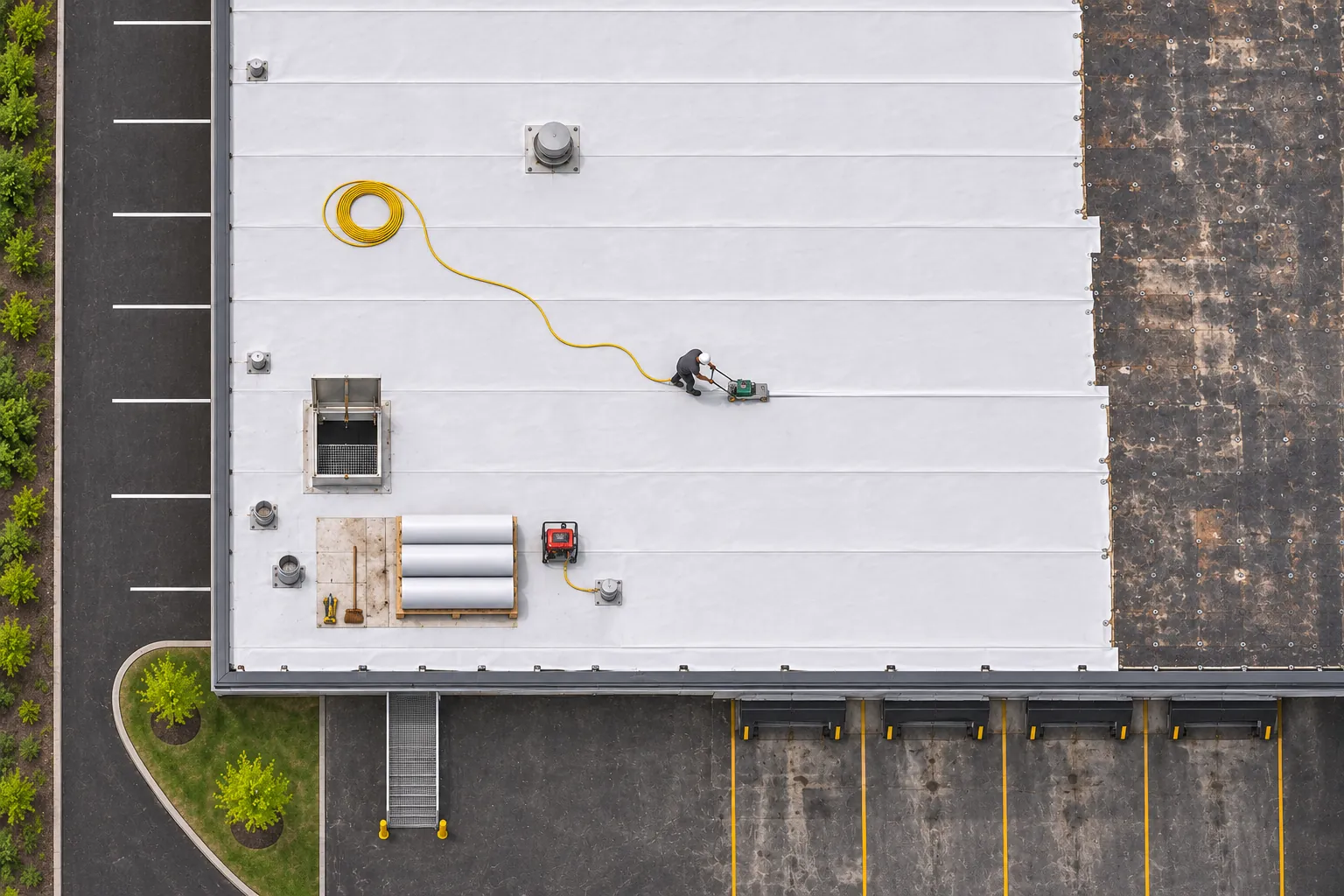
TPO Roofing
A white welded sheet suits big warehouse fields and roofs over hot summer offices, where reflecting sun off the roof matters.
TPO roofing in Easton
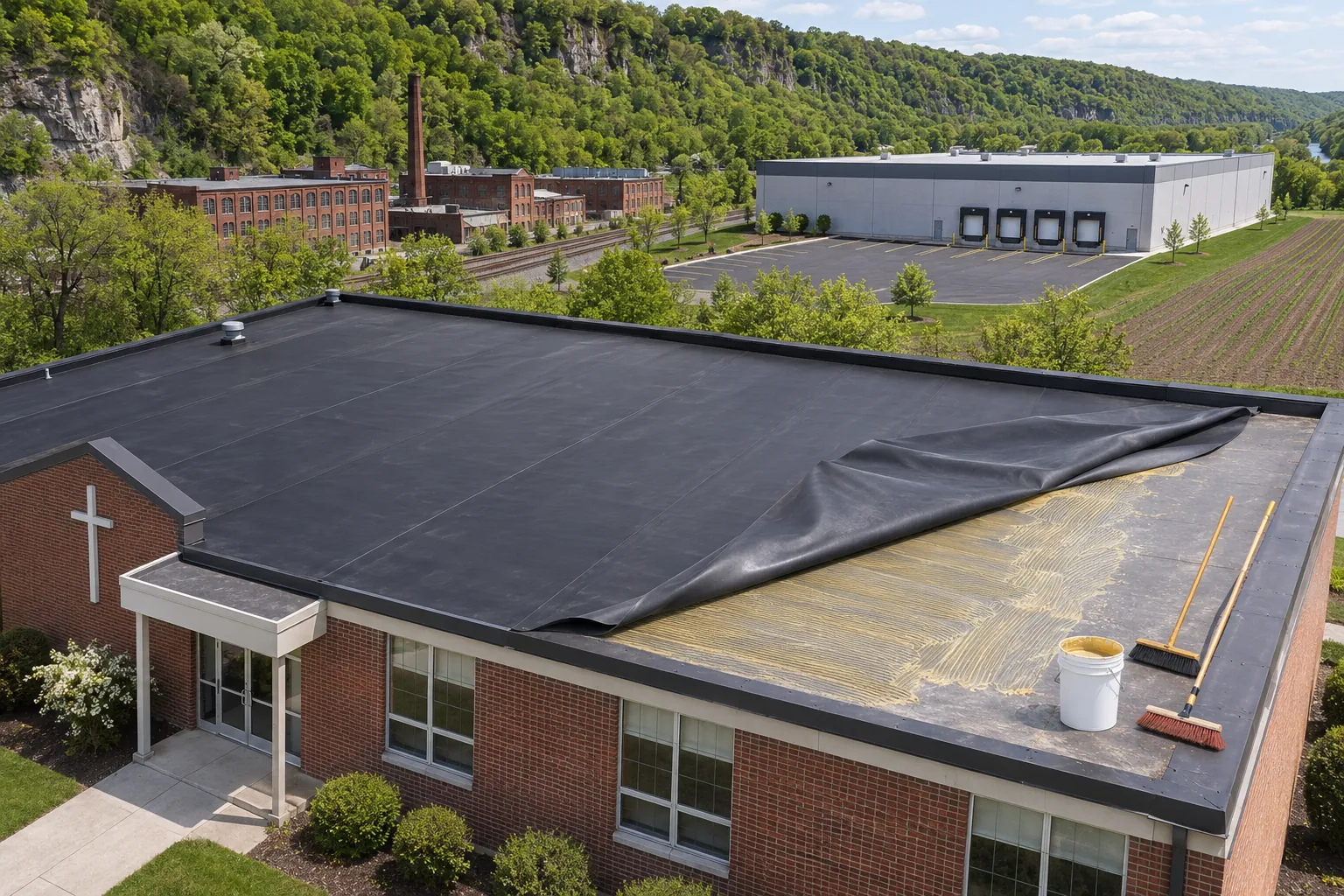
As an Easton EPDM roofing contractor, we replace worn rubber roofs with fully adhered EPDM, new cover board, taped laps, and fresh flashing at every wall.
Easton EPDM roofing fits low-slope buildings with many penetrations and tall walls. The table shows good fits and what needs attention first.
| Factor | Good Fit for EPDM | Check or Fix First |
|---|---|---|
| Penetrations | Many small pipes and vents | Units that need new curbs first |
| Walls | Brick parapets with new counter-flashing | Loose coping or open mortar joints |
| Weather | Hard freeze-thaw winters | Drains clogged with debris or ice |
| Traffic | Light service visits | Daily traffic with no walkway pads |
| Substrate | Dry board under new cover board | Wet insulation left in place |
| Exhaust | Office and church fans | Oily kitchen or process discharge |
Owners call about an old rubber roof when these signs show up together.
Water appears days after snow, once melt finds an open lap.
Older lap tape and adhesive lose grip and lift at the edges.
A ring forms over the same spot in the fellowship hall each spring.
Aged rubber pulls away from the parapet corner and tents across the base.
Leaks keep popping up in new spots after every repair visit.
Dropped tools, branches, and hail leave pinholes in the field.
Interior downspouts drip at their joints near the ceiling.
Water sits around drain bowls where the rubber is clamped down.
Rooms under the roof stay chilly and smell musty in winter.
Moisture trapped below the sheet soaks the insulation for years.
A boiler flue or masonry stack shows water stains around its base each winter.
Filled pans and old cone flashing crack and pull away from the rubber.
How the rubber is attached and what sits under it are chosen for the deck and the walls.
The sheet is glued to cover board for a smooth roof with nothing loose on top.
Large sheets over church halls, offices, and older brick blocks with many pipes.
Laps and flashing are detailed so melt has no easy path in at seams or walls.
Rubber flashing runs up the wall under new counter-flashing or coping.
A new rubber roof fixes the details that let water into older buildings.
Fewer laps across the field than older rubber roofs carried.
Rubber stays pliable when the roof freezes overnight.
Flashing climbs the parapet under new caps.
Fresh clamping rings and strainers at every outlet.
Primed lap tape bonds sheet to sheet along each seam.
Wet board is replaced before the sheet goes down.
Adhered sheets go on without hot torches or kettles.
You get a list of laps and details to watch.
Call and we will check the laps, walls, and drains while the melt pattern is still visible.
(484) 978-7949Call UsThe same five decisions, set on the roof in this order.
Cores through the rubber, a check of every lap and wall, and photos of drains, stacks, and pipes set the scope for each section.
Wet board and loose sheets come off. A dry, well-attached base can sometimes stay under new cover board, which the cores confirm.
Fully adhered sheets suit most halls and offices. Deck type, wind exposure at corners, and the cover board confirm the method.
Services, classes, and office hours set which sections open on which days, and interior covers go up first.
Every lap is checked, drains are run with water, and you receive the photos, product data, and an upkeep list.
Other systems we install when rubber is the wrong match.
A white welded sheet suits big warehouse fields and roofs over hot summer offices, where reflecting sun off the roof matters.
TPO roofing in Easton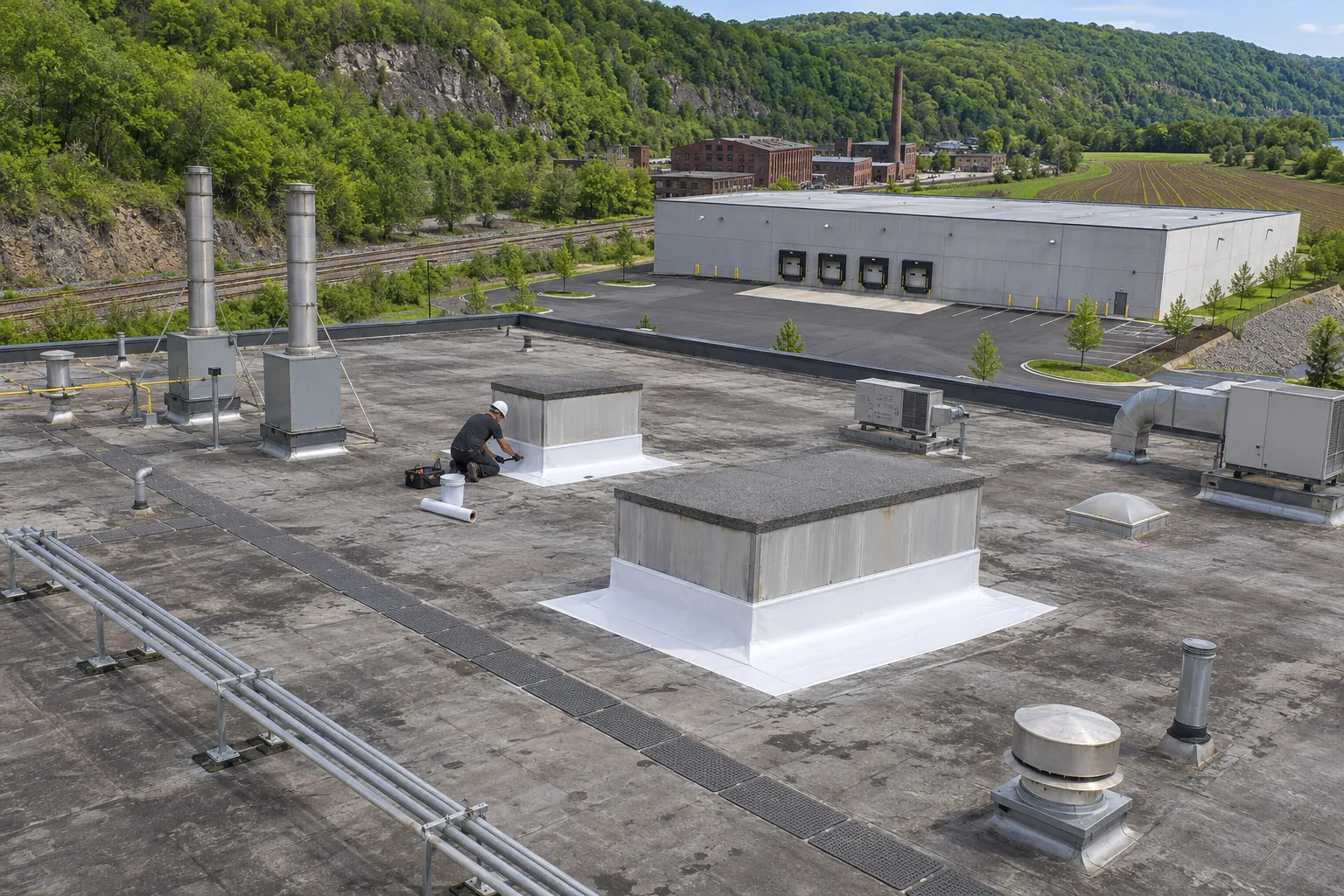
Exhaust, ducts, and pipe racks on plant roofs call for their own flashing heights, membrane choice, and walkway plan.
Industrial roofing in Easton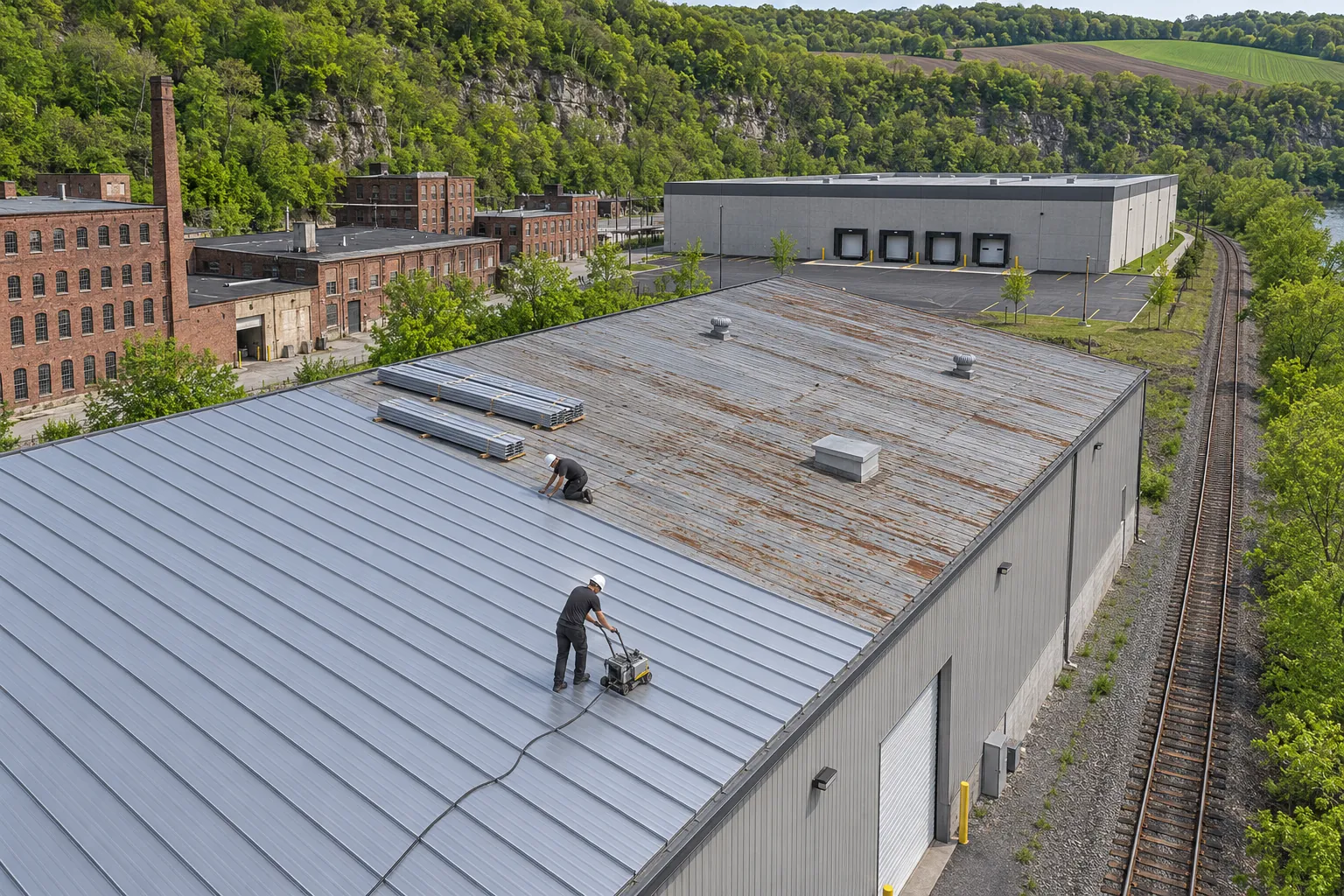
Pitched steel panels shed snow toward the eaves and suit shops and pre-engineered buildings with simple layouts.
Commercial metal roofing in EastonShort answers on price, timing, winter weather, and fit.
The whole assembly sets the price, and the rubber is only one part. Size, sheet thickness, insulation, tear-off layers, deck repairs, edge metal, flashing, and equipment connections are all priced after the inspection. Access, staging, and the season change the scope as well.
Condition tells more than any average. We look at seams, perimeter stress, traffic damage, and moisture under worn areas to judge how much service is left. Maintenance records explain how the roof has changed, and replacement timing follows what the inspection finds.
Water that reaches a damaged seam or flashing freezes and pries it open further, especially where drains are blocked. We check outlets, low areas, and stressed connections once the roof is safe to walk. Flexible rubber still needs firm attachment and good details.
Often, when the attachment and assembly match the structure and the upkeep plan. We compare drainage, rooftop traffic, and the transitions at walls and equipment first, and judge the rubber together with the insulation and flashing under it.
Yes, when the sheet is dry, well attached, and failing in a few places. Patches use primed rubber and lap tape. Widespread wet insulation or brittle flashing at most walls points toward replacement.
Fully adhered sheets suit most halls, offices, and brick blocks here, since they leave nothing loose on the roof and handle many penetrations. Ballast adds weight the structure has to carry and hides the sheet from inspection, so we confirm the deck and wind exposure before either choice.
Yes, wherever technicians cross to rooftop units, hatches, or drains on a regular schedule. Rubber pads adhered along those paths take the boot and tool traffic, keep punctures out of the field sheet, and show visiting trades where to walk. We leave drain paths and lap edges clear of the pads.
Tell us about the building and the leaks you see. We will check the rubber, the walls, and the drains, then write up a scope.