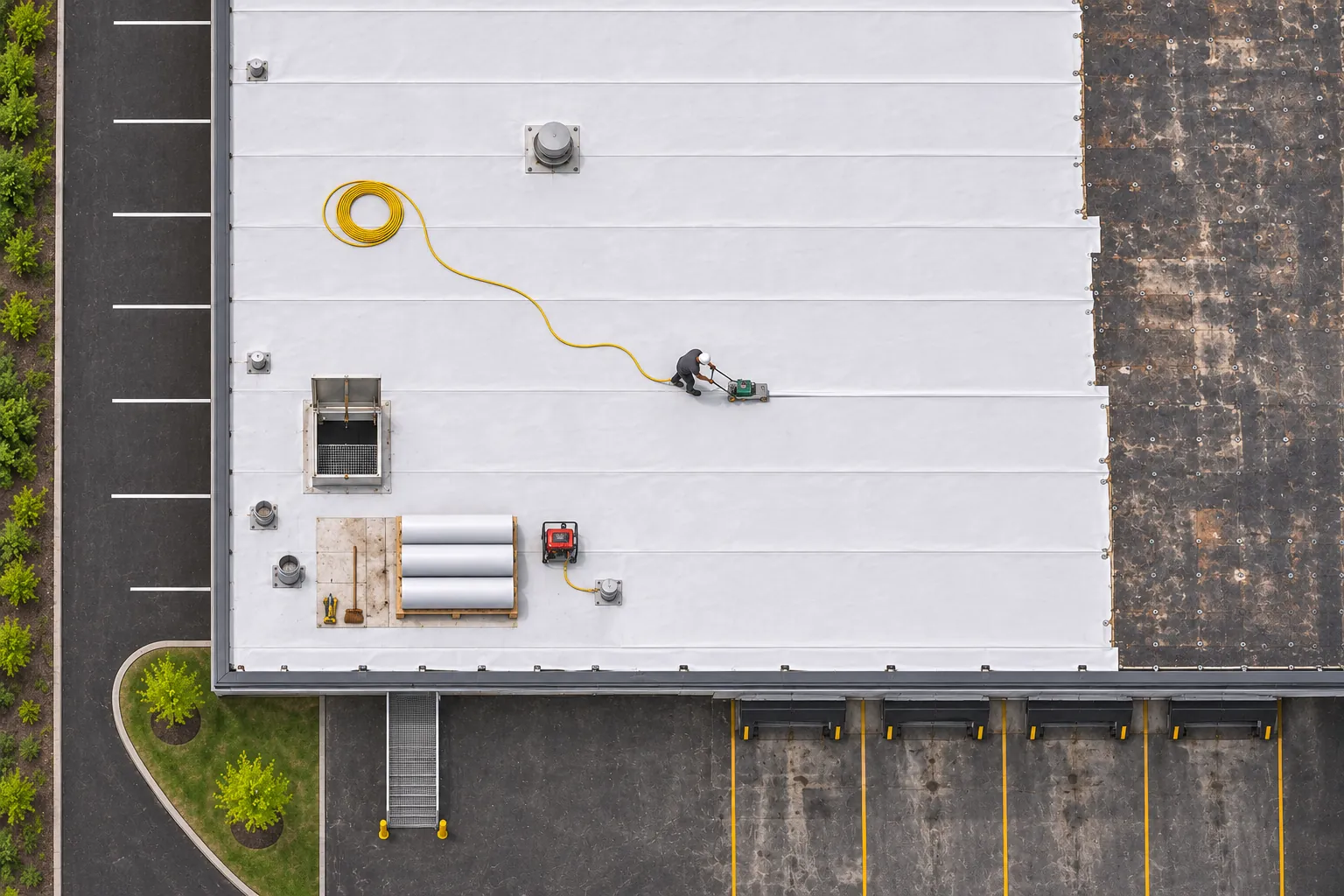
TPO Roofing
Welded white sheets on larger flat roofs with straight parapet runs and interior drains.
TPO Roofing for East Stroudsburg
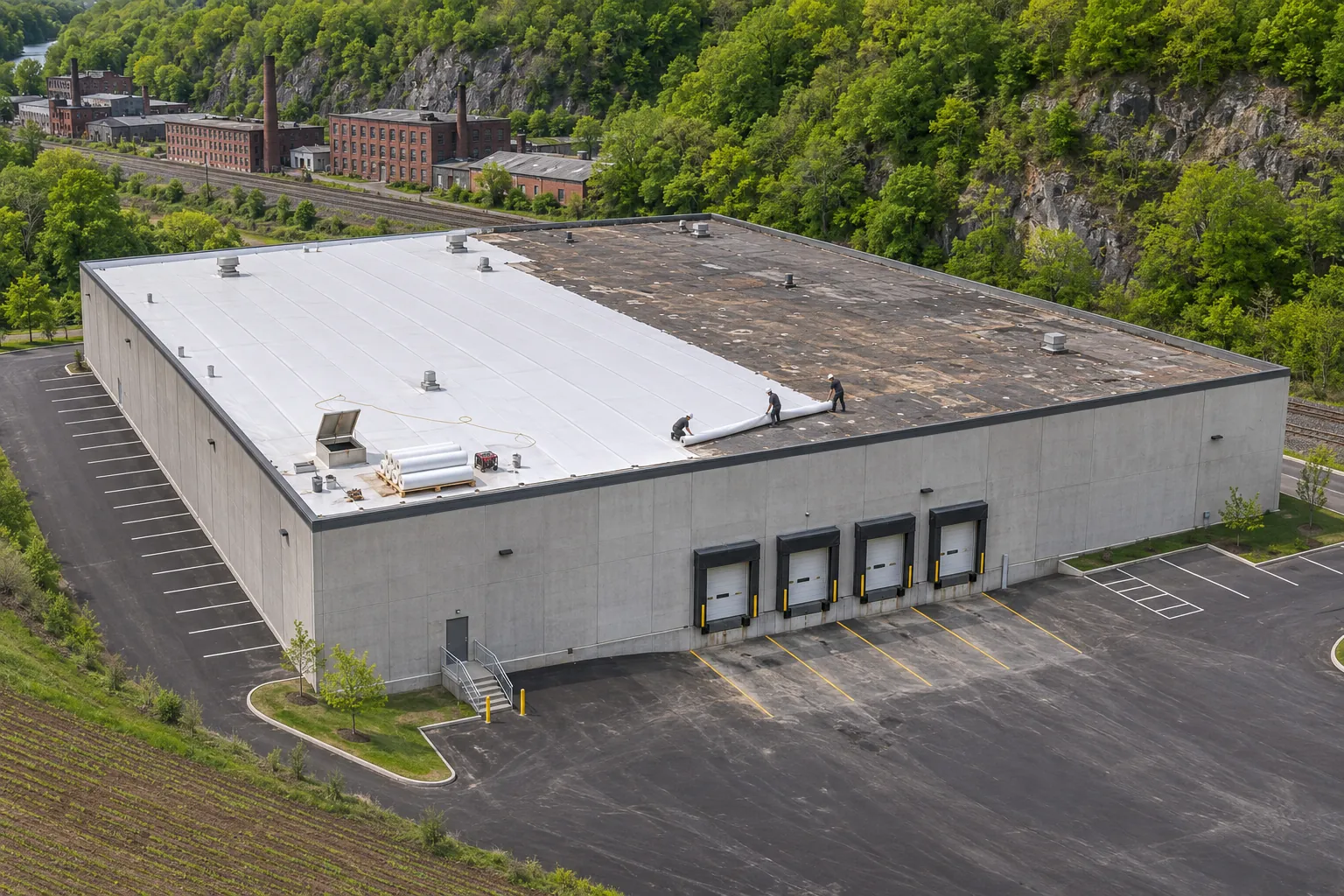
As an East Stroudsburg commercial roofing contractor, we replace flat roofs on parapet buildings and rebuild the coping and wall caps along with the membrane.
East Stroudsburg commercial roofing on older blocks is only as dry as the wall caps above it.
Water that slips through an open coping joint runs down inside the parapet and comes out behind brand-new base flashing. We inspect every cap joint and its attachment before the scope is written.
Loose metal coping is replaced with new caps and cleats; stone or terra-cotta caps get their joints and anchors checked with your mason. The membrane then runs up the wall under counter-flashing set to the new roof height.
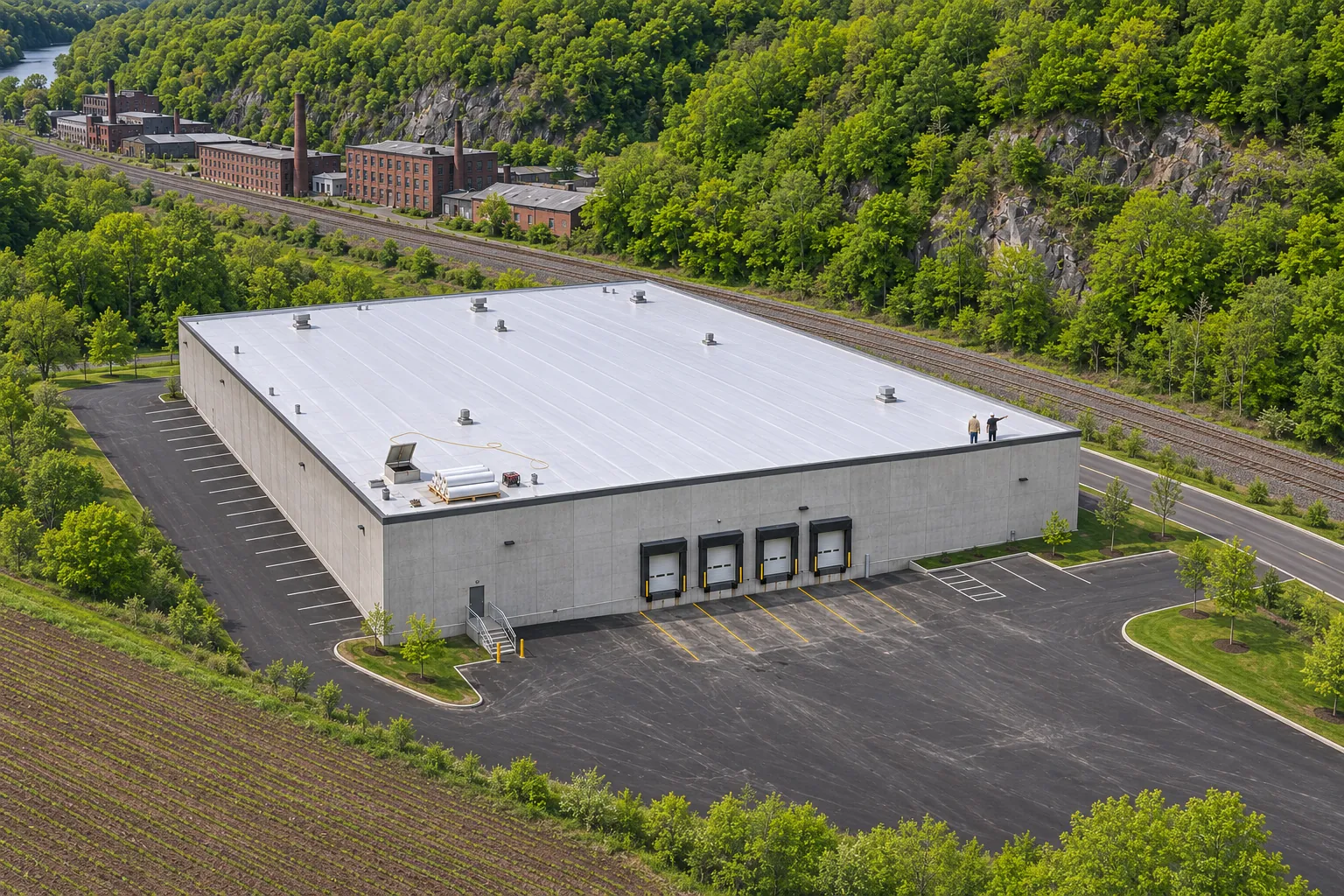
Wall leaks and roof leaks look alike from inside, so we trace each one.
Paint lifts high on the walls under the parapet line.
Sealant at the cap seams cracks and lets water into the wall.
Drips follow a single exterior wall after wind-driven rain.
Reglet flashing pulls out of the mortar and opens a gap.
Melt shows up inside where snow drifts against the parapet.
Drifted snow sits above flashing that stops low on the wall.
Past repairs have smeared sealant along every wall joint.
A membrane glued to damp masonry loses grip at the edge.
Conductor heads on the outside wall overflow during heavy rain.
Small or clogged scuppers in the parapet hold water against the wall.
Rooms by the outside walls feel drafty under the roofline.
Water entering at the walls soaks insulation in a strip around the edge.
Sealing the walls and roof together ends the guessing about where water enters.
New caps shed water past the face of the wall.
Flashing climbs above the snow line at the walls.
Cap anchors and joints are reset where needed.
Each entry point found is noted with photos.
Wall outlets are resized and flashed to drain freely.
Metal coping is held by continuous cleats.
Wet board along the walls is replaced.
Base flashing runs above the usual drift height.
Every system below ties into rebuilt coping and counter-flashing.
Welded white sheets on larger flat roofs with straight parapet runs and interior drains.
TPO Roofing for East Stroudsburg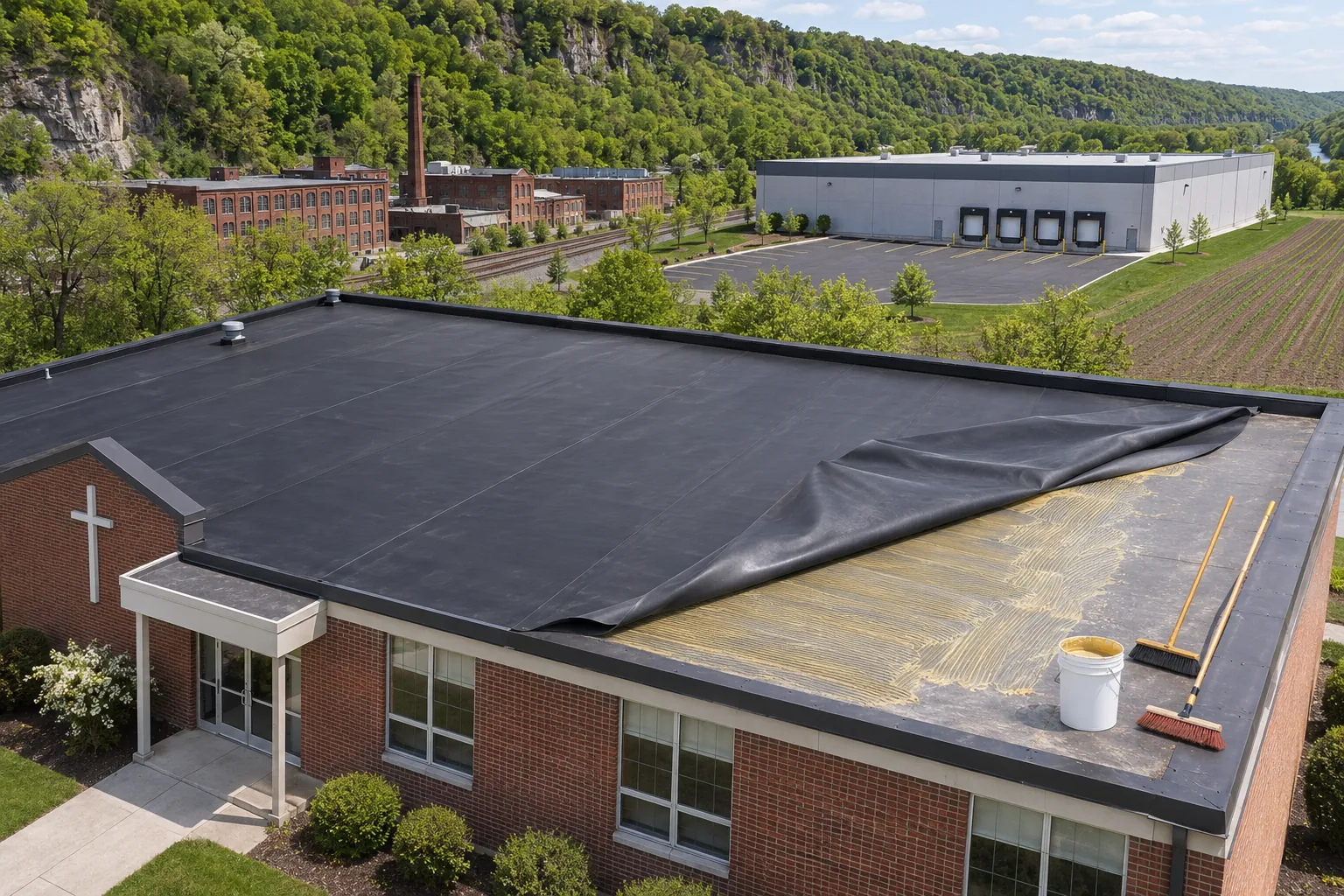
Adhered rubber that wraps tall walls, scuppers, and many pipe penetrations easily.
EPDM Roofing for East Stroudsburg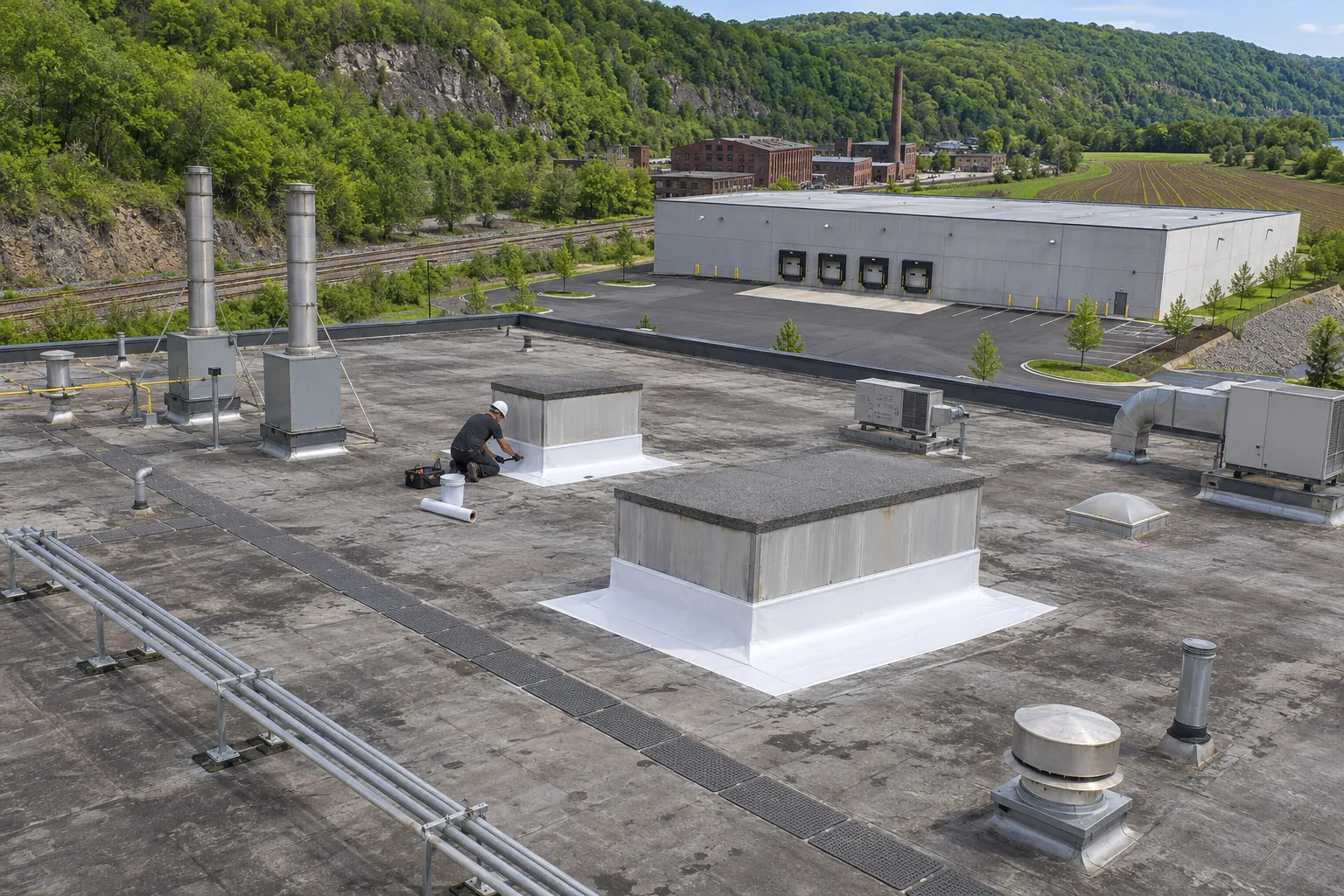
Plant roofs where stacks and units sit close to the parapets and need room for flashing.
Industrial Roofing for East Stroudsburg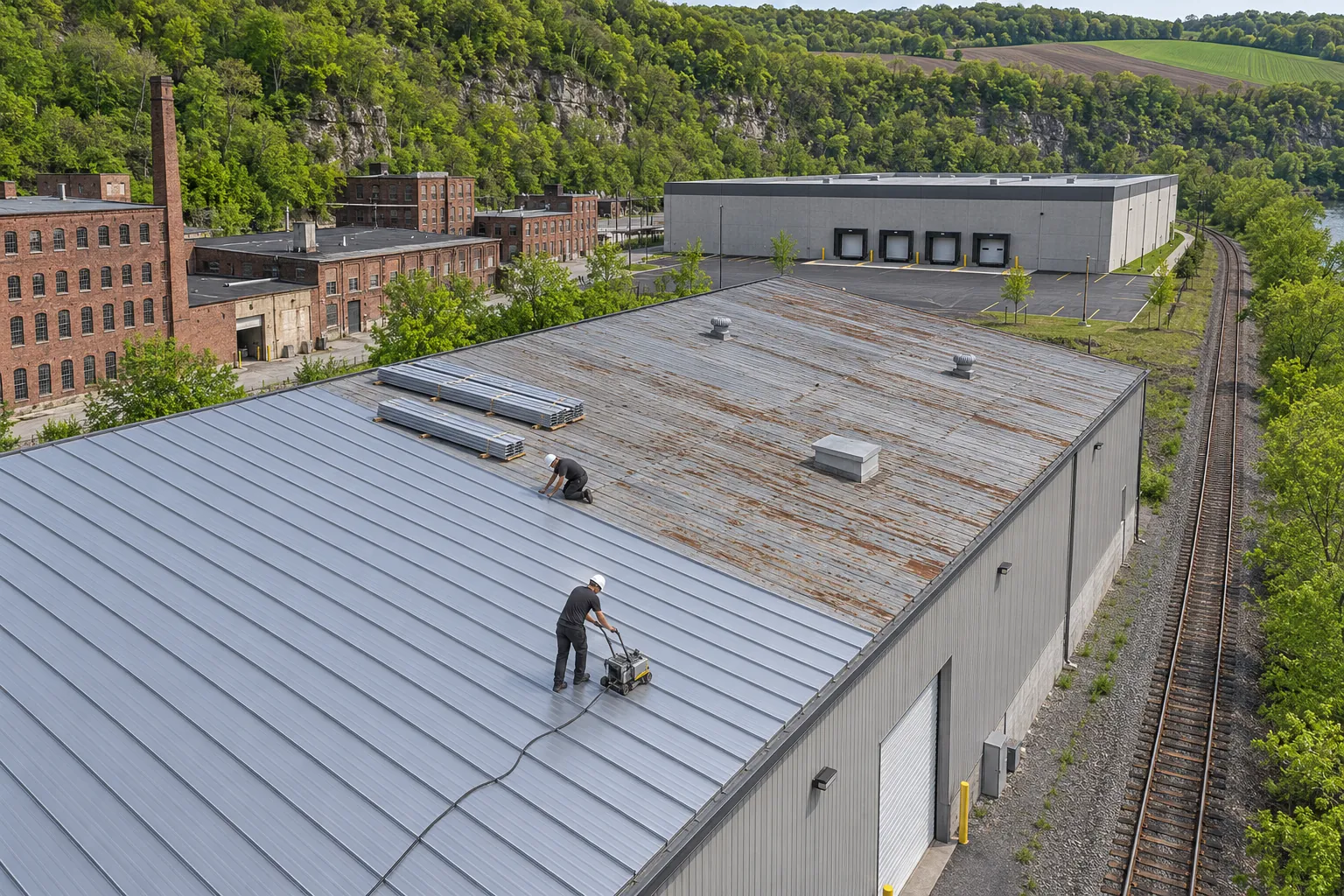
Standing-seam panels on steel buildings with simple trimmed edges and no parapets.
Commercial Metal Roofing for East StroudsburgCall and we will check the coping and flashing on that wall before anyone patches the roof.
(484) 978-7949Call UsFive decisions for a parapet building, set in order.
We walk the field and every wall, opening cap joints and checking how the coping and scuppers are attached. Interior stains are matched to the wall above them as we go.
Each stain inside is matched to a roof seam, a cap joint, or a reglet with water tests before the scope is final. Test results are written into the scope beside each stain.
Metal caps are replaced on cleats; masonry caps are reset with a mason where joints or anchors have failed. Caps are pitched to throw water toward the roof side.
The new sheet runs up each wall under counter-flashing set to the finished roof height and above the drift line. Inside corners get pre-formed pieces so the laps stay out of the corner.
Suspect joints are tested with a hose before closeout, and the photos go in your building file. The coping joints are photographed before and after.
Own another building nearby? We also install roofs in these towns. Somewhere else entirely? call us or send us a message.
Warehouse reroofs planned around stored goods and docks.
Shops and plants with rooftop units raised for new insulation.
Retail strips reroofed one storefront at a time.
Industrial properties with several roofs on one lot.
What owners of parapet buildings here ask most.
Defective coping belongs in the reroof plan, because water through it lands above the new flashing. We check the joints and attachment along the whole perimeter. A new membrane leaves that wall route open if the cap stays as it is.
The field membrane, insulation, drains, and every curb, plus the walls: coping or caps, counter-flashing, and the joints where roof meets masonry.
Yes. Storefront blocks with short parapets get the same wall-and-roof inspection as larger buildings, sized to the roof.
Because the roof and the parapet have to be planned together. A roofer who handles both sets the cap, flashing, and membrane heights so they work as one edge.
Sometimes. Metal coping we replace ourselves; stone and terra-cotta caps with failed mortar or anchors are reset by a mason, scheduled before the membrane goes up the wall.
By testing in order. We flood a short stretch of roof near the stain first, then wet the coping joints above it with a hose, watching inside each time. Whichever test brings water through shows the entry point, and the scope names it.
It can, but it costs more. Flashing installed now has to be opened again when the coping is redone, and water through the old caps keeps wetting the new edge in the meantime. We price the coping with the roof so the two can be done in one pass.
Loose or rusted reglet flashing is removed, the mortar joint is cleaned or cut, and new counter-flashing is set and sealed at the height the new roof needs. Where masonry is too soft to hold it, a surface-mounted bar is used instead and noted in the scope.
Send the address and tell us which walls show water. We will inspect the coping and roof together and write one scope.