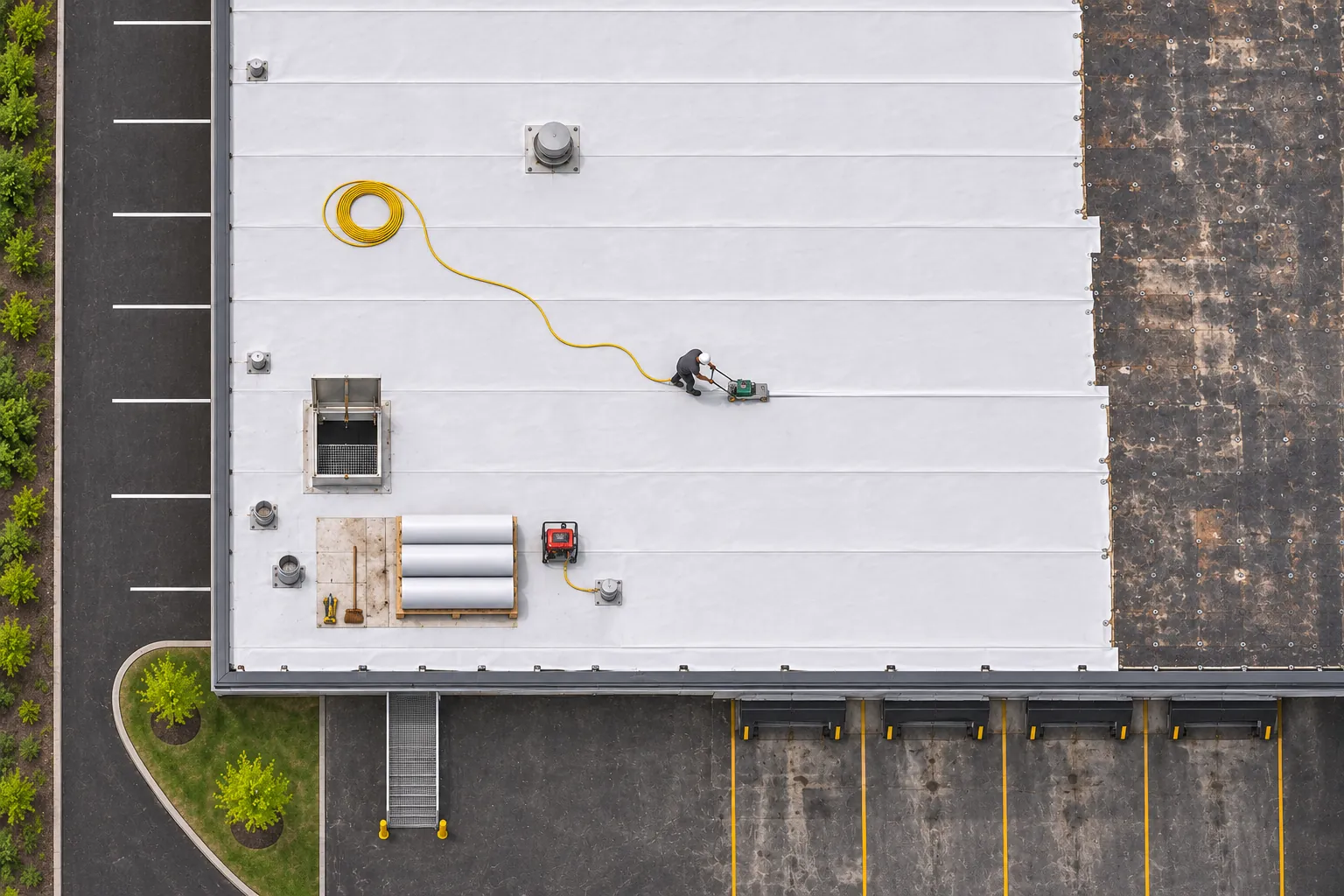
TPO Roofing
Warehouse wings and office sections with open fields take a welded white sheet well, away from the process exhaust.
TPO roofing in Easton
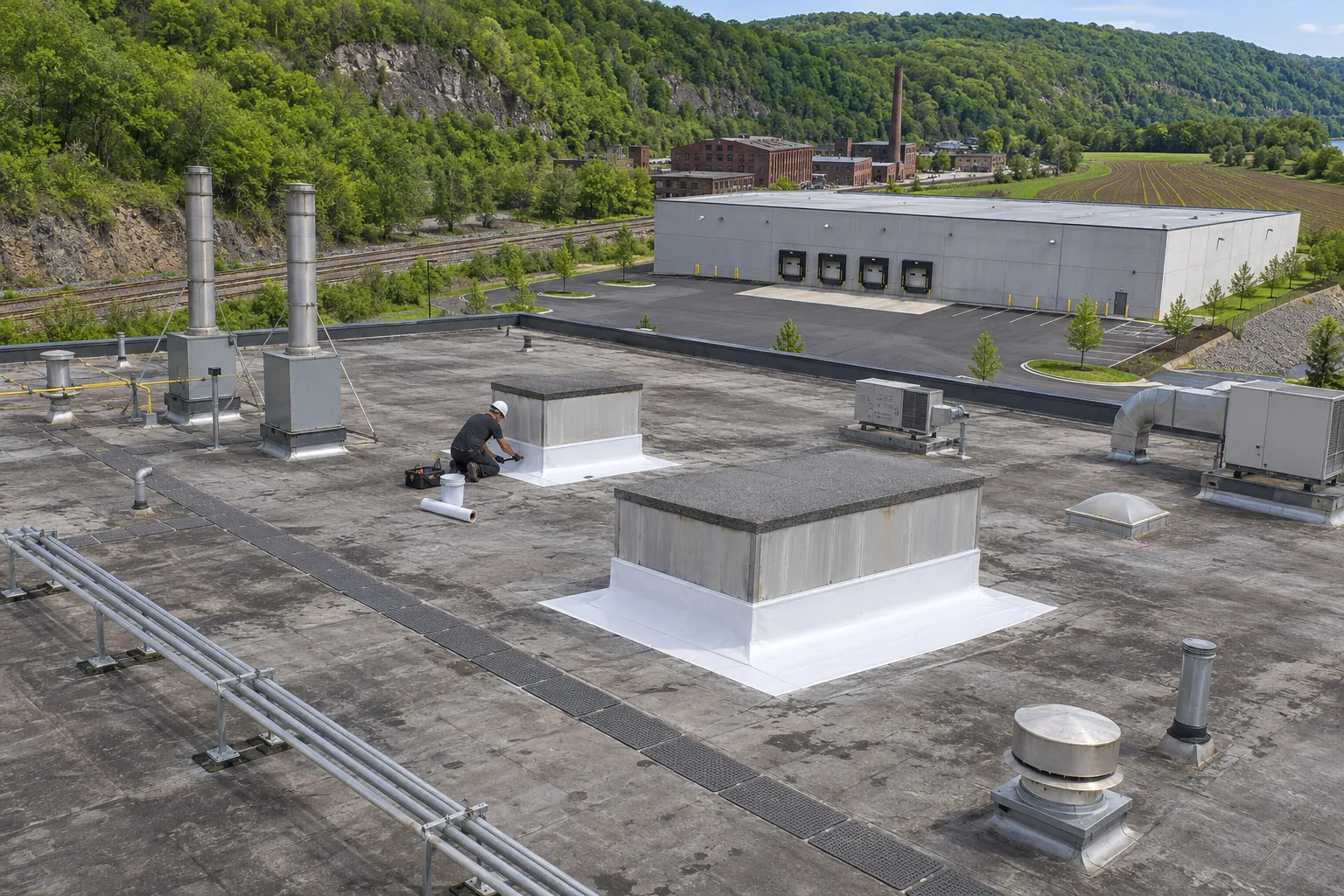
As an Easton industrial roofing contractor, we replace plant roofs in sections above running lines, with flashing and walkways laid out for every stack and unit.
Easton industrial roofing starts by matching the roof to what the plant puts on it. These factors shape the scope.
| Factor | What We Plan For | Check or Fix First |
|---|---|---|
| Exhaust | Membrane and flashing rated for the discharge | Grease or chemical buildup on the field |
| Interior humidity | Vapor control under the insulation | Condensation dripping from the deck |
| Equipment | Curbs raised to the new roof height | Units that must be relocated first |
| Foot traffic | Walkway pads along service paths | Shortcuts worn across the field |
| Production | Removal in controlled areas | Open product lines under the work |
| Deck | Repairs priced per unit | Corroded steel near process vents |
Plant roofs fail in the places the operation stresses most.
Maintenance hangs plastic over the same line every rainy week.
Hot, vibrating exhaust stacks split their flashing collars.
Drips fall from the deck even when it has not rained.
Humid process air reaches cold deck steel and wets the insulation.
Service crews feel the roof give near certain units.
Boots and carts grind through the membrane between hatch and units.
Product on racks near skylights comes back water-marked.
Low curbs leave too little flashing height above the roof surface.
Oily film shows on the roof around exhaust fans.
Grease and oil attack some sheets and leave them swollen and weak.
Floor drains near the lines back up during heavy storms.
Units and duct supports set over drain paths trap water on the roof.
Plant roofs mix several assemblies; these are the pieces we plan most often.
Removal over production is split into controlled areas with isolation and protection set first.
Pads follow real service routes and leave drains and inspection points uncovered.
Membranes are compared against exhaust contact, humidity, traffic, and the substrate.
Collars, curbs, and pipe supports are rebuilt to the new roof height.
A plant roof built for its exposure stops the leaks that interrupt production.
Work is phased so production areas stay covered.
New flashing moves with hot exhaust stacks.
A barrier keeps humid process air out of the board.
Pads take technicians straight to each unit.
Units sit high enough for full base flashing.
Walkways and units stay clear of water paths.
Sheets are chosen for the discharge they face.
Isolation and lifts are scheduled before removal.
Call and we will find the entry point, protect the line, and plan the permanent fix around your shifts.
(484) 978-7949Call UsFive decisions, made with the plant manager, before any section opens.
Cores, a walk of every stack and unit, and notes on exhaust residue, condensation, and worn service paths set the scope. Interior photos of the deck near process vents are added where we can reach them.
Equipment lifts, disconnects, and isolations are listed with the trades that handle them and the dates they need. Each item gets a responsible trade and a date in the schedule.
Membrane, vapor control, and insulation are chosen for exhaust, humidity, and traffic, then flashing heights are set for each curb. Where humidity is high, a vapor barrier goes under the board.
Removal areas are matched to shifts, shutdowns, and the lines below, with covers in place before any section opens. Sections close each evening with membrane or a temporary seal.
Your crew sees the walkways, flashing, and drains before closeout, and gets the photos and upkeep list. Upkeep points for the first year are marked on a roof plan.
Plant campuses often mix systems across their buildings.
Warehouse wings and office sections with open fields take a welded white sheet well, away from the process exhaust.
TPO roofing in Easton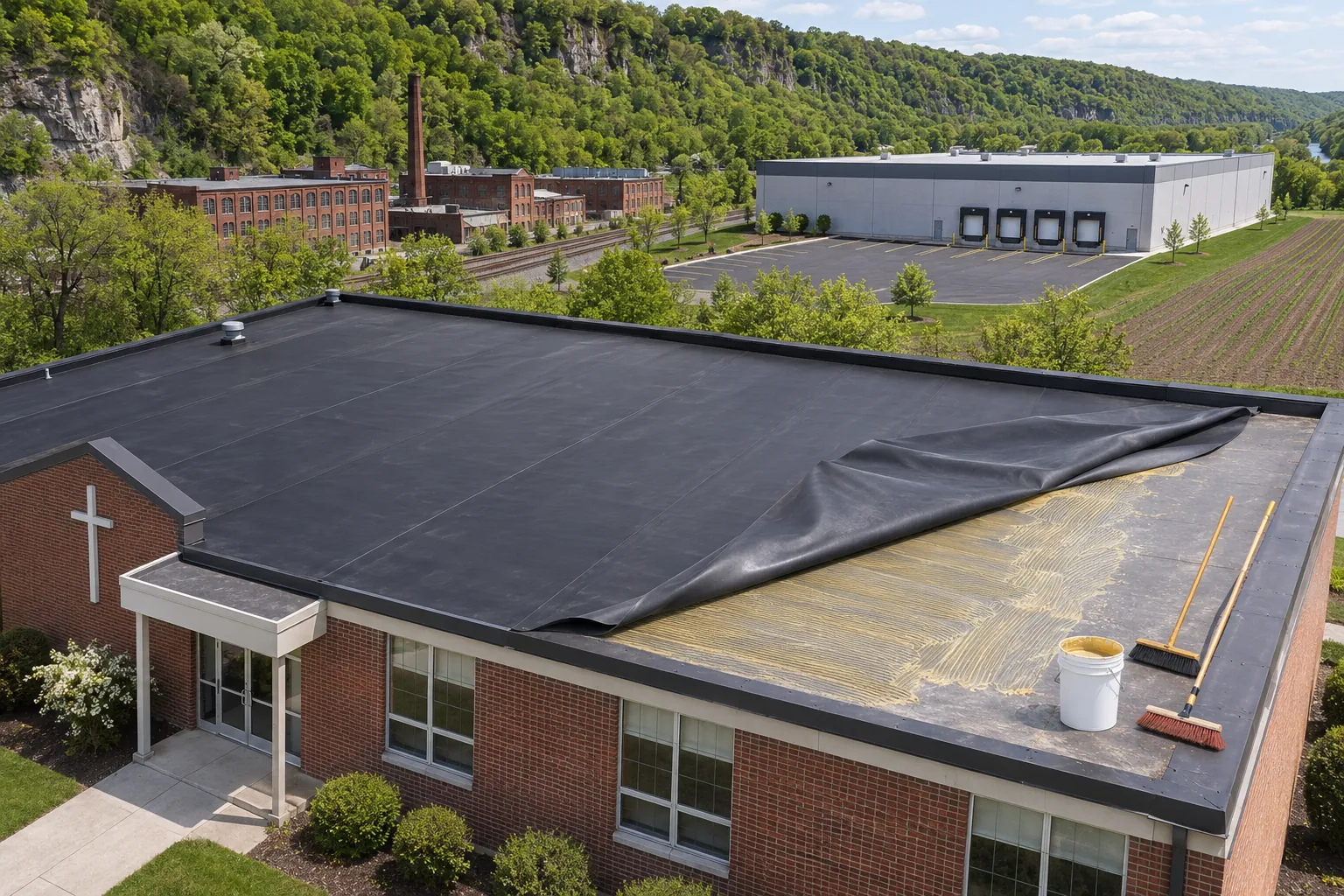
Older brick sections of a plant with many pipes and tall walls are easier to detail in rubber.
EPDM roofing in Easton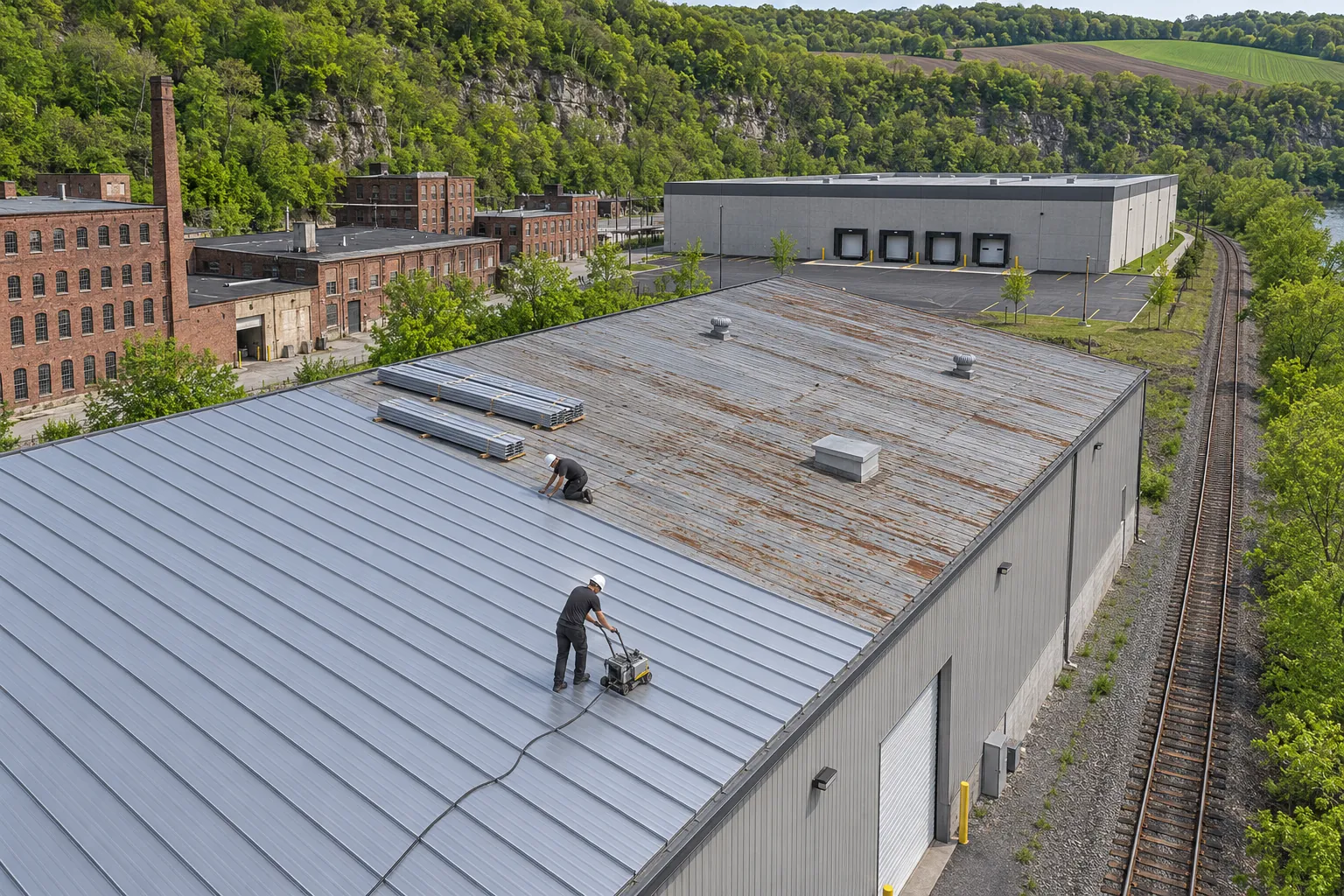
Steel buildings, storage sheds, and maintenance shops on the property suit standing-seam panels.
Commercial metal roofing in EastonAnswers on cost, priorities, walkways, and materials.
It changes access, protection, and the order of work. Price still comes from inspecting size, system and thickness, insulation, tear-off layers, deck repair, edge metal, flashing, and equipment. Staging over active production adds controlled work areas, which the scope lists.
An assembly suited to the exhaust, indoor moisture, equipment access, and the work below. We look at how those exposures meet at curbs, insulation, and the deck before choosing materials, and we name any isolation needed while sections are open.
They can if they dam runoff or cover outlets. We lay pads along the routes technicians really use and keep water paths and inspection points open. Vulnerable details stay uncovered, and the rest of the membrane stays off-limits to traffic.
Against the plant’s real exposure and the full assembly. Exhaust contact, interior humidity, service traffic, and substrate condition all count. A sheet that works on one plant can need different details on another, so drainage and operations stay part of the choice.
Yes. Give us the shutdown window and we will put the removal over the most sensitive lines inside it, with the rest of the roof phased around normal shifts.
Usually only for short windows over the most sensitive areas. Most sections are removed and closed during normal shifts with protection below, and the shutdown dates are saved for work over open product lines, clean rooms, or electrical gear.
Each stack gets a collar sized for its diameter and temperature, set on a base that lets the stack move as it heats and vibrates. Hot or oily discharge decides which membrane and flashing materials surround it, and a storm collar sheds water off the joint. We photograph every stack detail for the maintenance file.
Send the plant address and your shutdown calendar if you have one. We will walk the roof with maintenance and plan the phases.